Sunday, October 4, 2015

North Korea: Just a train ride away

Getting there


Before we took the train across the border early in the morning, we were warned of the things we had to pay attention to while in North Korea.  We weren’t supposed to mention the phrase “North Korea” because there’s only one Korea.  Even the sign for our tour group got changed to just Korea since our tour guide didn’t want to get lectured for half an hour on the proper name of the country.  At the train station, we spotted quite a few North Koreans with boxes and boxes of goods they were taking back home.  It was pretty easy to tell that they were Korean with the distinct pin they were wearing to respect their leaders Kim Jung Il and Kim Il Sung.  It’s not obvious that we’ve traveled to North Korea if you look at our passports because passports don’t get stamped.  Instead, the stamp goes on a separate piece of paper, which we were instructed to hold on to for dear life because we would have no identity if we were to lose that piece of paper and it’s definitely a priced possession which could sell for a lot in North Korea.  


The train is quite comfy and well air-conditioned.  There are two three-tiered bunk beds in each small compartment and seats by the window.  The train from Dandong to Pyongyang first stopped at Sinujiu for a border check and we were all frantically scribbling down our details on the three border crossing forms as the trained stopped for a border check.  We caught a glimpse of a deserted ferris wheel and soldiers washing clothes outside some buildings after passing the bridge to the other side.  The border guards are well acquainted with electronic devices and they took the liberty of checking for any prohibited photos (pictures of soldiers, political literature).  It was also a chance for the train to re-charge its battery.  We were quite lucky that the train didn’t make frequent charge stops, which happens usually.  Not before long, we were chugging past green pastures of corn and peas.  Curious faces of farmers looked at us and we waved back to say a friendly hello.  It was quite warm and humid in North Korea in August, so kids found themselves some cool by swimming in small ponds amongst the fields.  They greeted us with happy faces and excited hand waves as our slow train went by.  The occasional van passed by, but we mostly saw people on their bikes and cows labouring away in the fields.  Farmers were chatting with each other as they gave time for their sheep and chickens to feed in the lush green grass fields.  Life seems so simple.  We didn’t make another stop until a few hours later when the train staff emptied the trash bins from the train.  Some started walking up and down the aisles selling fruit juices, salted fish and kimchi.  Five hours later, the tall buildings of Pyongyang finally came into view.


Friday, October 2, 2015

North Korea

Prepping for the Trip


North Korea has been on my travel list for awhile but it was only recently that tours have started back up after months of tourist restrictions to the country due to the Ebola and respiratory syndrome cases spreading around.  All tourists have to be part of a tour group to travel to and around North Korea.  This particular tour I joined started in Shenyang and then heads to Dandong, the border town next to North Korea, before embarking on a day long train journey across the border through to Pyongyang.  Korean shops and signs can be found everywhere in Dandong as there is a significant amount of trade between the city with North Korea.  

 
Sitting across from Dandong is Sinujiu and the cities are connected by the Sino Korea Friendship Bridge.  Parts of an older bridge built between 1909 and 1911, also known as Broken Bridge, can be seen alongside the bridge, a reminder of the American intrusion into the countries during the Korean War.  Built by the Japanese during its occupation of Korea between 1937 and 1943, the bridge was bombed by Americans during the Korean War to cut off supplies from the Chinese to North Koreans.  While it is relatively easy for Chinese people to travel to North Korea, South Koreans aren’t allowed in, and many join the boat tours that travel along the Yalu River sitting alongside China and North Korea to catch a glimpse of the North.  At night, there’s a huge contrast between the activity-filled and brightly lit Dandong side and the dark and lifeless Sinujiu, an eerie reminder of what lies on the other side is a country whose people are completely closed off to the rest of the world.  It’s a place where people live with little worry about how much they earn or being homeless because everything is provided for, until famine strikes and there’s nowhere to go because no one is allowed out of the country, which was what happened in the 1990s when many “defectors” made deadly escapes to flee the country.  


Friday, September 11, 2015

Zhangzhajie

Picturesque Hunan


Famed for its beautiful mountainous landscapes and the background for the film Avatar, Zhangzhajie is in the northwestern part of Hunan province.  The ride from Changsha was a lengthy six and a half hours before we reached the ancient town of Fenghuang.  With wooden houses standing on the banks of the Tuo Jiang River that flows through the town, this beautiful water town is still inhabited by villagers that still sustain themselves by fishing on the river and taking tourists on boat rides.  The town is predominantly inhabited by the Miao people who specialize in batik art and making silverware.  With the help of contemporary writer Shen Congwan’s novels, the beauty of this ancient town has spread far and wide.  From Fenghuang, it was only a few hours before we got to Zhangzhajie.  We first went on a boat ride on traditional Chinese boats on Baofeng Lake before heading up to the mountains.  From the lake, there’s a good perspective of the mountains with misty tops.  The eye opener at Zhangzhajie is Yuanzhajie.  We zipped up the surrounding mountain on a 342 metre elevator which only took a few minutes before we found ourselves around mountain peaks of various levels.  These natural and irregularly shaped columns rise from deep valleys and are covered with pine trees that disappear in and out of view in the cloud mist.  It’s never enough to look at the mountains from one perspective in Zhangzhajie since there’s always something different depending on the flow of the clouds and the foliage cover.  This ever changing beauty of Zhangzhajie makes it one of the most picturesque spots for nature lovers to enjoy.


Wednesday, July 15, 2015

Lost in Yunnan

A multicultural province


The Mosuo tribe is one of the most interesting tribes with its matriarchal aspects in society.  Females are the heads of households and inheritance runs through mothers.  Marriage is often described as walking marriages since men function to provide for reproduction by slipping into a woman’s home at night and leaving the next morning, but have no responsibility to help raise a child and or care for the wife.  The father figure of a family is taken on by uncles.  While the male can have sexual relations with as many women as he likes, they are shunned by their village and peers if they do so without the consent of the woman, so basically they have to end a relationship before starting another.  

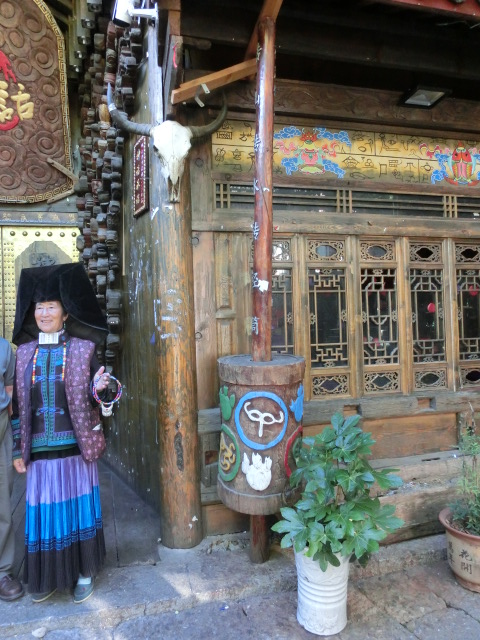
The Nakhi tribe is populated mostly in the northwestern part of Yunnan and Lijiang and are well known for their Dongba pictograms, which were developed in the 7th Century and can still be spotted on the streets.  This tribe is heavily influenced by Tibetan culture, as can be seen from their Tibetan prayer flags and carvings of their religious gods and spirits, which can be found through different natural elements.  Nakhi women are known for their hard-working nature.  From managing livestock to cooking and cleaning, they are good at everything.  It is often said in Nakhi tradition that if the man are relaxing with their smoke pipes, drinking and minding their pet falcons, the woman at home must be doing a very good job!

Yunnan’s delicacies

Eating for health


There’s an endless list of health food items when you roam around markets in Yunnan looking for something to bring home.  Hotpot cow liver mushroom Between June and September is the mushroom harvest season in Yunnan, so this is the best time to be eating delicious and juicy mushroom hotpot, especially with the mushroom soaking up all the sweet juices of the stock, which is usually made from chicken bones.  Pairing hotpot with a delectable piece of roasted pumpkin pancake filled with red bean paste is the way to a happy stomach.  Of the approximately two thousand varieties of edible mushrooms, 800 can be found in Yunnan.  Cow’s liver, pig’s stomach, white man’s head are all mushroom names.  The Hani tribe  has even built homes in the shape of mushrooms.  Amidst the green fields and mushrooms, it feels as though I was transported to a scene in Alice in Wonderland!

Spirulina is well-known for its health benefits, from immune system boosting to having anti-ageing properties.  Yunnan’s Chenghai Lake near Lijiang is one of the three places in the world that has natural spirulina.  The other two are Lake Chad in Africa and Lake Texcoco in Mexico.  The spirulina sold in Yunnan come in tablet form and can be taken like a medication or ground up for shakes or simply added to food.

The energy boosting magic maca is another product that has been attracting tourist dollars in Yunnan in recent years, just as it has in Peru.  Grown in Yunnan’s highlands, the maca in China is often soaked in alcohol and drunk.  But be warned: maca counterfeits are rampant on the streets, so it’s better not to buy if you’re unsure about what you’re buying.  

Monday, July 13, 2015

Lijiang

Water village


Lijiang is a beautiful water town in Yunnan.  An earthquake in 1996 brought this previously little known town to the world’s attention and it has since been rebuilt to attract tourists.  The town was mostly populated by the Nakhi tribe and today, little old ladies with their traditional costumes can be found dancing in the town centre.  Wooden buildings with beautifully carved window frames sitting across each other on either side of small bridges are the icon of Lijiang, as are the narrow cobblestone paths that can easily confuse tourists.  These buildings house numerous bars, restaurants and souvenir shops today.  While there is little water flowing through the many channels in the town, in the old days, the water flowing through was clean enough to drink and was the main water supply to each household.

Saturday, July 11, 2015

Tea horse caravan trail

Route to the west


The tea horse caravan trail was the arduous route that Tibetans, Indians and the Han Chinese took to trade. with each other back when there wasn’t a convenient way to travel between Tibet, Myanmar and China, mainly in the Yunnan, Guizhou and Sichuan provinces.  The Tibetans would trade their horses for Chinese tea, sugar and salt.  Stretching across some pretty risky terrain, including canyons, gorges and the Qinghai-Tibet and Hengduan mountain ranges, this route provided Tibetans with health necessities that complemented their meat heavy diets while the Chinese exchanged muscular horses in preparation for battles.  Starting at Xishuangbanna in the original Pu’er tea villages, the route from China spans across Dali, Lijiang, Shangri-La and Lhasa and then on to India, Nepal and Myanmar.  The route is over 2000 km long with 56 stops.  While the route was mainly used around a thousand years ago, long before that, over 3000 years ago, communication between the Chinese and Tibetan tribes took place, as evidenced by tombs found on the road.  More than twenty ethnic groups can be found along the trail, including the Nakhi people in Lijiang.  Today, pilgrims to Tibet and the sacred Meili Snowy Mountains still follow the route on their pilgrimage.