Saturday, September 1, 2012

Earthen Homes

Fujian province

First mistaken by the western world as UFOs when they were “discovered”, the earthen homes in Fujian Province are exceptional examples of building tradition and function that offer shelter, safety and community to large families.  Designated as a UNESCO World Heritage site in 2008, the earthen buildings or “tulou” are a set of buildings constructed of earth and sand in Fujian that are occupied by clan groups.  The mud walls are complemented with tiled roofs with overhanging eaves.  There are currently more than 20,000 of these structures in existence in the mountainous regions of southeastern China.  Built between the 15th and 20th centuries, these earthy structures are hidden amongst beautiful rice and tea terraced fields.  Originally constructed for large families and for defence purposes, tulou’s are built inward looking with a single entrance and windows to the outside only passed the first floor.

It’s amazing that these structures have withstood hostile weather, earthquakes and warfare over so many centuries and are still inhabited by large families today.  Today, tulou’s have been designated as World Heritage sites and farmers depending on subsistence living are taking good care of their rich cultural heritage homes while depending on sustainable agricultural practices in the tulou communities. What's great about these homes is that they're cool during the summer and warm during the winter and with they keep generations of families together by promoting communnal living.

Monday, January 30, 2012

Fiji Paradise

Shangri-La Fijian Resort & Spa

As the ten hour flight from Hong Kong to Fiji touched down in Nadi with plenty of cheering and clapping followed by Fijians dancing and singing with their ukuleles at the airport, I knew I was going to have a great time in Fiji - a country blessed with beautiful natural scenery and people with incredible warmth and hospitality.

Our driver took us on a 45 minute scenic drive along local villages and sugar cane plantations from Nadi to the Shangri-La Fijian Resort & Spa on Yanuca Island. The 110-acre resort offers the best of both worlds - being secluded enough as it is on its own island, yet close enough to nearby towns as it is connected by a short bridge. I took a deep breath of crisp fresh air and marveled at the simple way of life that Fijians lead as we passed by farmers selling pineapples along the road with smoke coming from simple shacks where villagers are cooking with firewood.

From afar, the island sits picturesquely between the clear blue South Pacific sky and the vast azure ocean. Arriving at the gate, we were warmly greeted with a welcoming “Bula” and offered  refreshing mango juice in the reception area as we waited to be checked-in. There is no air conditioning in the lobby of the Shangri-La, but it didn’t feel hot at all. That's because the open-air high-ceiling sitting area encourages cross-ventilation so there's always a gentle tropical breeze. The area is also artistically decorated with traditional Fijian wooden crafts, festive cookie boxes and calendars put on sale by local students. This is one of the many ways that the resort supports the local communities.

Our room was in the ocean wing, a quieter part of the resort which offers breathtaking views of the Pacific. Designed with organic earth tones and decorated with colourful paintings of the local flora and fauna, and filled with natural sunlight, the locally sourced room furniture made from palmwood gave an extra hint of South Pacific ambiance to the cozy room. All my troubles melted away as my biological clock switched to Fiji time and I relaxed in the laid-back tropical bliss. With a room that is separated from the Pacific only by a coconut tree lined lawn and white coral lined beach, it was the perfect time to enjoy the view in our private balcony sipping a warm cup of morning tea to awake my senses.

To ensure that vacationers stay fit during their holiday breaks, there is something for everyone, from a golf course that is irrigated by reclaimed water to a gym that offers a generous view of the South Pacific as well as bike rentals to go around the island and of course, snorkeling and diving adventures. With boardwalks stretching all the way across the resort, even a morning and evening stroll between the different resort wings is a leisurely experience. As it is situated in such a sensitive marine area and complying with the Shangri-La hotels’ high standards for sustainability, the resort exists with harmony with its natural surroundings and local communities. On daily nature walks guests learn about the ethnobotancial uses of local Fijian plants, such as the oils from the dilo seed which leaves your skin feeling smooth and beautiful and the leaves of the Tavola beach mahogany which are great for children who eat too many sweets. Not to be missed along the lush vegetation lined boardwalk leading to the lobby of the resort are the flying foxes, fruit bats that are indigenous to Fiji.

Over 700 mangroves have been planted along the island and Shangri-La staff and guests participate in regular beach cleanups to cleanup up trash in the pristine waters around the island. In addition to snorkeling amongst colourful coral reefs and diving in the turquoise clear waters, families can build fishhouses which are placed into a shape of a turtle to eventually grow into a coral reef. Being part of the Fiji Locally Managed Marine Area Network, this is one of the many ways that the Shangri-La helps to contribute to the Yanuca Marine Protected Area.

To get a taste of local Fijian culture, nothing beats the fire dancing show at the Marua Village at the Shangri-La. Twirling flames of fire and machetes flying in the air wowed the audience and the kids certainly loved dancing along with the Fijian tunes. Everyone got a great laugh when the ladies in the audience went on to imitate the “warriors” dancing but the gentlemen doing the bellydancing with the Fijian dancers were even funnier. A wonderful buffet of local Fijian cuisine with crispy roasted pig, brown sugar charcoaled chicken plus beef and seafood coconut stew complements the show. The desserts were very well done, especially the cassava root covered with caramel sauce and banana pudding. With such fresh ingredients and back-to-basics cooking styles, Fijian food certainly do wonders in building national rugby players who are amongst the best in the world!


After a few days of soaking up sunshine and a late afternoon horseback ride along the rail tracks near the resort, it was the perfect time to unwind with a traditional Fijian bobo massage at the Chi Spa. With the open-air architecture complemented by colourful Fijian hibiscus flowers at the spa reception area, I was already in a state of bliss as I sipped my herbal lemon grass tea. The private spa bure, which can also be booked for an overnight stay, offers a stunning view of the Pacific. Combining traditional Fijian aromatic herbs with coconut oil, the treatment is ideal for circulation and tense muscles. It wasn’t long before I dozed off into a state of deep relaxation as my body was pampered. As I walked out of the spa, feeling revitalized with the sweet smell of coconut oil all over, I caught the gorgeous sunset with shades of pink, purple and orange one last time by the rippleless infinity pool, reflecting on this wonderful trip to Fiji.

Thursday, May 7, 2009

Kai Tak

Hong Kong's Former Airport Redevelopment

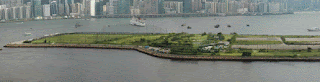
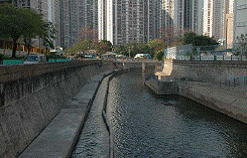
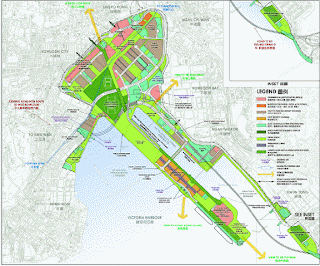
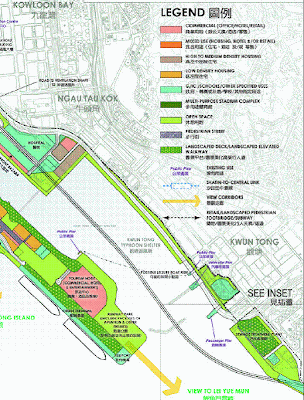
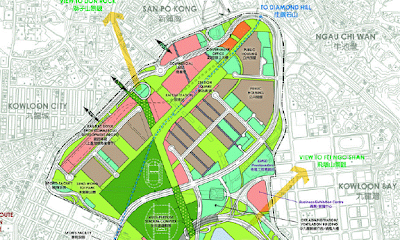
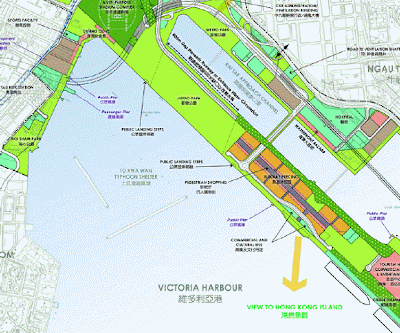
Known as the international airport of Hong Kong from 1925 to 1998, the Kai Tak airport was replaced by the Chek Lap Kok airport in 1998. The airport and its surrounding areas are slated for redevelopment. Located in the north side of Kowloon Bay, the project covers an area of about 328 hectares and consists of the prior airport area as well as waterfront areas of To Kwa Wan, Ma Tau Kok, Kowloon Bay, Kwun Tong and Cha Kwo Ling. After the airport closure, the site has been occupied by temporary uses such as a golf court on the previous runway, bus depots, car sales exhibitions, recreational grounds, a recycling yard, a concrete mixing plant and a flying training school. Issues with the area include the stench from the local channel, land contamination, public access and connectivity with other areas. Proposed solutions include bioremediation, cutting down on air pollution through the use of a district cooling system, and transportation improvements with light rail transit.


In 2006, a blueprint for the redevelopment of Kai Tak was created after previous efforts of reclamation were strongly opposed by the public and the Protection of the Harbour Ordinance was used by the Court of Final Appeal to establish a zero-reclamation ruling. The proposed HK$100 billion plan to be implemented from this year to 2021 has an overall vision for the area to be a harbourfront city that will be a hotspot for sports, entertainment and tourism. Proposed features include two cruise terminals, a luxury hotel, an urban park, a 200 metre high viewing tower, a pedestrian promenade along the waterfront, a district cooling system, a potential MTR station connecting Central and Sha Tin and a monorail connecting to Kowloon Bay and Kwun Tong where a revitalization project is simultaneously occurring. Surrounding developments consisting of government offices, public/private housing and commercial buildings will be low to medium density to allow for a view of the harbour and surrounding hills. Development tenders are currently being invited for the project’s infrastructure works.


Friday, May 1, 2009

Ngau Tau Kok

Snapshots of the Everyday Life in Hong Kong’s Public Rental Housing

\


The daily media coverage on the H1N1 flu pandemic has brought back memories of the SARS outbreak back in 2003. The private housing estate, Amoy Gardens which was originally built on the site of Amoy Food-a manufacturer of soy sauce, in Ngau Tau Kok was infamous since one of the first people to come into contact with SARS lived there and quickly spread the disease to other residents. Also well known in Ngau Tau Kok is the public housing estate of Lower Ngau Tau Kok which opened in 1967. The majority of residents are seniors and the area has been the oldest public housing estate in Hong Kong since Shek Kip Mei’s public housing was burned down in 1953. The seven apartment blocks that house over 5000 units will be demolished by the Housing Authority this year. About 3000 households and 160 commercial tenants still remain while some tenants have been moved out. Interestingly, the authority will be keeping some of the appliances and furniture in the units for historic purposes and there was a proposal that the items can later be used for public displays.


Earlier this month, there was an auction with about 50 items collected from the local residents and shop owners. Items included cabinets from bakeries, hair dryers from barber shops, old TV sets, revolving signs from beauty salons, etc. Proceeds from the auction will be used to publish about the history of the estate and to assist seniors to move out prior to the demolition. Visitors have been frequenting the area to capture the last of the residents’ local culture that will soon be gone. More details on the auction and artists' exhibits can be found here.


Monday, April 20, 2009

Wedding Card Street

A Case of Redevelopment in Hong Kong


Wedding Card Street, also Lee Tung Street, in Hong Kong is a street in Wan Chai that had been the destination of about-to-be-married couples wanting to order wedding cards and calendars. Measuring 150m long and 9m wide, Lee Tung Street was founded in the 1910s. Tailors and barbers first settled in the street followed by building material and metal retailers. In the 1950s, the street was famous for headquartering major newspapers and printing shops as the government aimed to easily monitor the operation of illegal operations, such as those specializing in counterfeit banknotes, through concentration of these shops. Wedding print items were produced starting in the 1970s. In 2003, the Urban Renewal Authority announced its HK$3.58 billion plan to redevelop Lee Tung and McGregor Streets, an area of 8900 sq.m. The plan affected 54 buildings and 647 property owners. There are also plans for the Urban Renewal Authority to work with the MTR Corporation to build an extra MTR exit worth HK$100 million in Lee Tung Street with a tunnel near the Southorn Playground on Johnston Road. The redevelopment site’s private land is now solely owned by the Urban Renewal Authority. Compensation offers of HK$4079/sq. ft. have been offered to the 647 homeowners and by the end of June 2005, more than 85% of the affected homeowners accepted the compensation offers. While more than 90% of the owners accepted the government’s compensation package, the 2 flat owners and 8 shop owners who refused to leave had three months to leave their buildings.
Local residents say that this plan to partially develop Wai Chai Market into a 46-story shopping centre and residential building and the transformation of Lee Tung Street into a Wedding City arcade of 40,000 sq.ft. and 1415 flats is only partially preserving the area’s rich cultural heritage. While the Blue House, a balconied tenement, will be preserved and residents will be able to move back in after renovations, the high-rise building being proposed for the Bauhaus style market and the commercial Wedding City do not fit into the local context. The distinctive character of diverse small shops will be gone. With the increase in rents for the new development, local businesses will not be able to afford the rent hikes and even though a short rent-exemption period will be offered, businesses may not be sustained after the exemption period since customers will be lost without a network of local businesses after the area is taken over by major property developers.


The H15 Concern Group, a name that originated from the “H15” symbol on the renewal map of the area, was formed by residents and local businesses in 2002 to conserve the historical uniqueness of the street. A people-oriented redevelopment plan, also known as the Dumbbell scheme since the affected area has the shape of a dumbbell, that featured the street as a walking street while retaining its historical elements and focused on restoration rather than redevelopment was proposed by the group in February 2005 to the Town Planning Board. But it was turned down by the Board due to a lack of transportation and environmental assessments. After raising HK$150,000, a revised version was submitted in June 2005. The proposal calls for retention of 30 tenement buildings, the removal of a proposed underground parking lot of 100 spaces and height reductions for four proposed high-rises by five storeys. In December 2007, 3 weeks before the group’s meeting date with the Town Planning Board to discuss alternatives, the demolition of tenement buildings began. In January 2008, the Planning Department rejected the group’s proposal due to insufficient assessment of the buildings, which had been identified to be in poor condition by the Urban Renewal Authority. Additionally, the request to scrap the proposed parking lot was not supported with the potential impact on traffic.

With the economic meltdown this year, the invitation for submission of tenders has been put on hold to allow developers to reconsider their interests in the public private partnership redevelopment project while ensuring that Urban Renewal Authority can recover its redevelopment costs. In 2008, 15 submissions from developers were received.